





Parents do not usually land on a page like https://www.alamoheightscombatclub.com/kids-jiu-jitsu/ by accident. Something has been on their mind. Maybe their child gives up too quickly. Maybe they avoid eye contact. Maybe they have too much energy and nowhere healthy to put it.
- Emotional growth does not look dramatic
- Respect becomes a habit
- Physical confidence without unnecessary strain
- Handling competition in a healthy way
- Common concerns from new families
- Is my child too shy for this?
- Does my child need experience?
- How long before we see changes?
- The long term effect most parents hope for
So you start reading. Comparing. Thinking it through more than you expected to. Because signing a child up for grappling is not just about activity. It is about influence.
Emotional growth does not look dramatic
Children feel frustration often. In school. With siblings. During sports. On the mat, frustration is part of the process. A move does not work. A partner escapes. They end up stuck underneath someone.
The difference is what happens next.
Instead of quitting, they are encouraged to reset. Breathe. Try again. No long speeches. Just repetition.
That repetition builds emotional control slowly. You may not notice it immediately. But one day, they pause instead of reacting. That pause is progress.
Respect becomes a habit
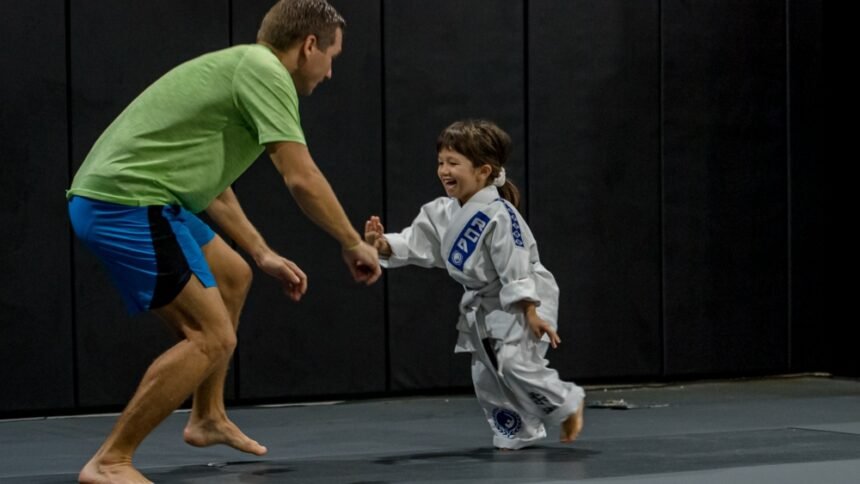
Respect in youth training is structured into every session. Students line up before class. They wait for instruction. They thank their partner after drills. If someone moves too aggressively, they are corrected calmly but firmly.
It is repetitive.
But repetition turns behavior into instinct. Children begin listening more carefully. Not just in class. Sometimes at home too. Not always. They are still kids. Still, the pattern forms.
Physical confidence without unnecessary strain
Parents sometimes picture grappling as intense or rough. In reality, youth classes focus heavily on control. Students learn how to fall safely. How to tap before discomfort becomes pain. How to release immediately when a partner taps.
The rules are simple and repeated often:
- Move with control
- Stop when instructed
- Protect your partner
- Stay aware of your body
Strength builds gradually. Coordination builds first.
And when a child realizes they can handle physical challenges safely, their posture changes. Slightly. But noticeably.
Handling competition in a healthy way
Not every student competes. Some train only in class.
For those who do compete, emotions run high. Nerves before matches. Excitement afterward.
Winning feels powerful for a moment. Losing can feel heavy.
But class continues the following week. Training continues. Improvement continues.
That return to routine teaches something important. Results matter. Winning feels good. Losing does not. That part is honest.
But practice keeps going. Nobody freezes time over one match. The focus shifts back to drills, to fixing small mistakes, to trying again.
Eventually they realize a setback is not some big statement about who they are. It is just something that happened.
Common concerns from new families
Is my child too shy for this?
Shy children often adjust slowly. Partner drills give them structured interaction without pressure to perform socially.
Does my child need experience?
No. Beginners start with basic movements and build gradually.
How long before we see changes?
There is no exact timeline. Some changes appear quickly. Others take months. Consistency shapes results more than talent.
The long term effect most parents hope for
What most families want is not a champion. It is resilience. They want their child to handle pressure without falling apart. To try again after failing. To stand a little straighter when walking into new situations.
Those qualities do not come from one class. They form over months of repetition. Over small struggles. Over controlled challenges.
Families who spend time reviewing https://www.alamoheightscombatclub.com/kids-jiu-jitsu/ are usually thinking long term. They are not chasing a quick change. They are investing in steady development. And steady development rarely looks dramatic.
Bottom of Form