



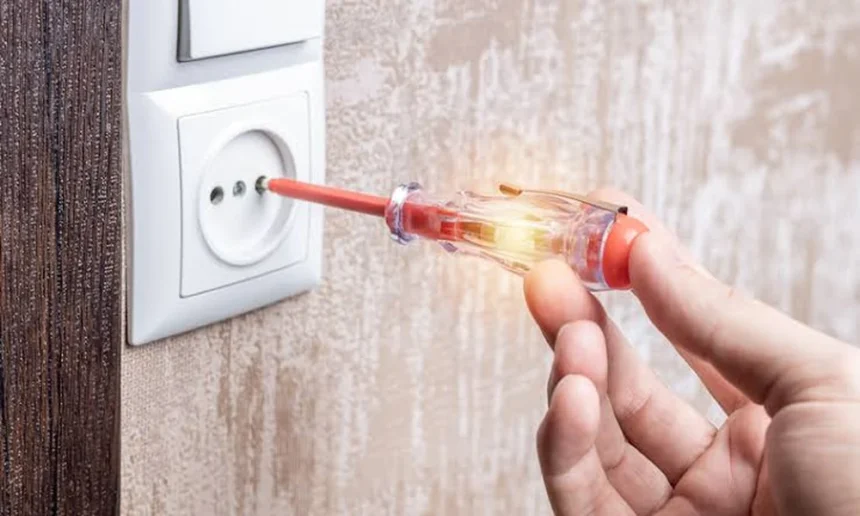

Seven warning signs show up in almost every house fire that starts from bad wiring, and most homeowners have seen at least two of them this month and shrugged. I’ve watched a lamp flicker for three days straight and told myself the bulb was going bad. It wasn’t. The outlet behind it was loose, and the wire had been arcing for who knows how long. That habit of explaining away small symptoms is the exact reason electrical problems sneak up on people.
Here’s what this guide promises: you’ll learn to read those symptoms fast and correctly, so you can tell a five dollar bulb from a five hundred dollar repair. If you’ve already noticed something off, look into outlet and wiring repair in Wilmington NC early, because coastal humidity here works against old wiring in ways inland homes never see. Cheap part swaps are a fine hobby. Wiring guesses are not.
Below, you’ll get a symptom-to-cause table, a short checklist you can walk through this weekend, and a clear line on when to stop poking and call in a professional.
What Are the Warning Signs You Should Never Ignore?
The National Fire Protection Association (NFPA) publishes fire data every year, and the category for electrical distribution and lighting equipment sits in the top handful of causes of home structure fires. That’s the boring, official way of saying: this stuff burns houses down, and it almost always telegraphs the fire first. A few signs deserve urgent attention, and the rest deserve a scheduled look. Here’s how I’d sort them.
| Sign | What It Usually Means | Urgency |
|---|---|---|
| Burning or fishy smell near an outlet | Overheating insulation or a failing connection inside the box | Call now |
| Scorched or discolored outlet face | Arcing or heat buildup behind the plate | Call now |
| Warm faceplate or switch | Loose wire or undersized conductor carrying too much load | Same day |
| Flickering across multiple rooms | Overloaded circuit or a loose service neutral | Same day |
| Buzzing or humming at the panel | Poor breaker connection, needs a licensed look | Same day |
| Frequent breaker trips | Circuit overloaded, or the breaker itself is aging out | Schedule |
| Two-prong outlets, no ground | No protective ground path in the wiring | Schedule |
Two of those rows are non-negotiable. Burning smells and scorch marks are the home electrical version of smoke coming out from under the hood. You don’t keep driving.
Why Coastal Homes See Wiring Problems Earlier
Ask any electrician who works near salt water and you’ll hear the same thing: coastal wiring ages on a different schedule. Humidity and airborne salt don’t care that your house was rewired in 2005. They go after the weakest metal they can find, and that’s usually the connection points, not the bulk of the wire run.
What you get are symptoms that look cosmetic at first. Corrosion creeping across a terminal. A slightly crunchy outlet when you plug in a vacuum. Paint on the plate hiding a little darkening at the top. The interior wiring in older homes can also still contain legacy aluminum branch circuit conductors. The Consumer Product Safety Commission has flagged that aluminum wiring tends to fail at terminations in ways copper does not, and homes from the late 1960s into the 1970s are where you find it. If your house is in that window and the panel label was painted over three owners ago, I’d budget for a professional inspection rather than a weekend of guessing with a multimeter.
The Weekend Checklist That Actually Prevents Fires
This takes about twenty minutes. Do it when the house is quiet so you can hear what you’re testing.
- Run the heat test. Plug a hairdryer into each outlet on the circuit, run it two minutes, then put your palm flat against the faceplate. Warm is fine. Hot means stop, unplug, and call.
- Look for ghost marks. Flip off the breaker and check behind cover plates for brown streaks, melted plastic, or a burnt smell you can only catch up close.
- Sniff around the panel. Any fishy, acrid, or burning smell near the breaker box is a call-today situation, no exceptions.
- Count your trips. If the same breaker has tripped more than twice in a month, something on that circuit is drawing more than it should.
- Test your GFCIs. Press the test button on every kitchen, bathroom, and outdoor receptacle. Anything that won’t trip or reset is doing nothing for you.
One honest note about the DIY stuff. Swapping a bulb, resetting a GFCI, replacing a cover plate: all fine. Opening a junction box to tighten a wire you’ve decided looks loose, when you can’t tell whether that circuit is still live, is how good intentions turn into emergency room visits. Electricity doesn’t give partial credit for effort.
What Happens When a Pro Diagnoses Your Outlet
A competent electrician walks in knowing the fault is somewhere in a chain: the device, the connection, the conductor, or the circuit feeding all three. The right move is to find out which link failed without tearing half your kitchen apart. That means a circuit analyzer or a clamp meter at the panel first, then working back toward the device only if the readings point there.
Before any repair, you should hear the plan in plain language and the price before the work starts. The Underwriters Laboratories Mark means a device passed third-party safety testing, which is why I’d push you to insist on UL listed replacements rather than whatever’s cheapest on the shelf. Ask for the old part in your hand. If nobody can show you what came out, you haven’t seen the root cause.
The repair itself is usually smaller than people fear. A fried outlet is a swap. An arcing neutral junction might need a proper box extension and a splice done right. The panel is the one area where I’d want to watch the electrician’s reasoning more than their speed, because that’s where a lazy fix turns into a recurring headache or worse.
How Often Should You Get an Electrical Inspection?
Every three to five years if your home is older than the 1990s, and sooner if you’ve added an EV charger, a hot tub, or a heat pump on top of the original panel. If you’re buying a house in eastern North Carolina, don’t skip the electrical inspection because the home inspector glanced at the panel and said it looked fine. Your general inspector is not licensed to open it, and they’ll tell you so.
I’d pick a proactive inspection over an emergency call every single time, and cost isn’t the only reason. The emergency call usually means a house without power, somebody standing in the dark, and a job that’s already halfway to the worse version of itself. The inspection means you find the corrosion and the undersized wire while it’s still just corrosion and undersized wire.
Your panel should have a schedule printed on the inside of the door. If it doesn’t, make one. If it does and nobody in your house has looked at it since 2009, this weekend is a fine time to change that.
What’s the flicker in your house telling you? Take the twenty minutes, run the heat test, and trace the symptom before it decides to announce itself on its own terms.