





Every July I get the same text from a friend down in Springfield: “It’s 92 in the house and the dog is mad at me.” Then I ask two questions. Is the outside unit running? And is the indoor coil blowing air, or just humming?
- Why Springfield Summers Break Equipment Differently
- What a Real Diagnosis Looks Like
- Step 1: The electrical checks come first
- Step 2: Refrigerant is measured, not guessed
- Step 3: Airflow and the evaporator coil
- Step 4: Condensate and safety controls
- Repair or Replace? A Decision Framework
- When to Call, and What to Expect
- A Maintenance Checklist You Can Actually Run
- The Part Most Homeowners Miss
That two-question filter is the whole game with cooling problems in southwest Missouri. Most breakdowns land in a handful of categories that a homeowner can rule out before anyone shows up, and knowing which category you’re in changes what you pay. So here’s what the process actually looks like from the driveway to the invoice, plus the triage sequence I’d run in my own house before I dialed a single number.
Why Springfield Summers Break Equipment Differently
Our climate does something to an AC that a coastal or desert system never faces: it runs wet. The Ozarks humidity means the unit isn’t just moving heat, it’s pulling gallons of water out of the air on every cycle. That condensate has to drain somewhere, and when it doesn’t, things get weird in ways that don’t show up on a thermostat display.
If you’re shopping around for who to call, this is why you should care about which air conditioner repair service in Springfield MO you hire. Not because the symptoms are exotic, but because a good tech reads the outdoor humidity and the attic ductwork at the same time. Roughly a third of the “my AC is broken” calls I’ve watched in this part of the state turn out to be airflow and drainage problems wearing a refrigerant costume.
Per the U.S. Department of Energy, a significant share of cooling energy in a typical home is lost through duct leakage and poor airflow. Concentrated in an attic that hits 130 degrees in August, that loss gets expensive fast. So when a tech starts inspecting your ductwork instead of only your condenser, they’re not padding the visit.
What a Real Diagnosis Looks Like
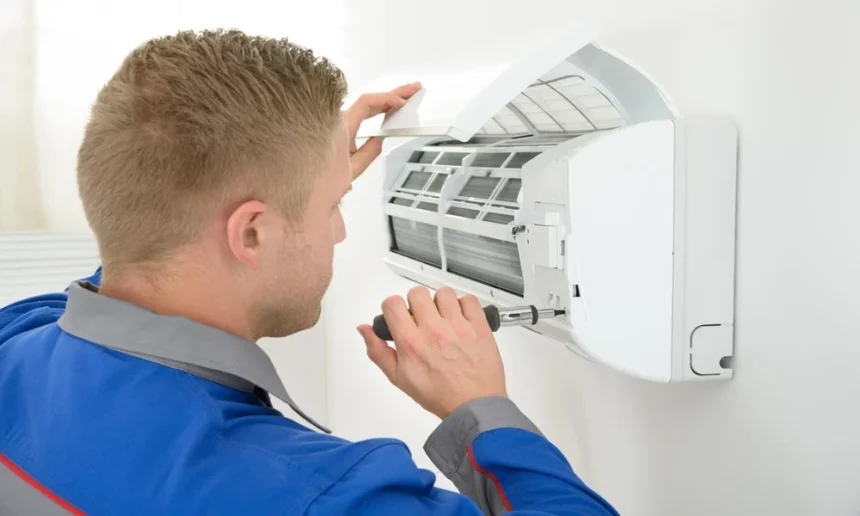
I’ve watched my share of these appointments, and the good ones follow a sequence. Not because there’s a rulebook, but because skipping a step means selling you a part you didn’t need.
Step 1: The electrical checks come first
Thermostat signal, contactor, capacitor, disconnect. Capacitors are the flat tire of air conditioning. They’re cheap, they fail in heat, and a bad one looks exactly like a dead compressor from the hallway. Any honest tech verifies power and capacitance before they touch a gauge.
Step 2: Refrigerant is measured, not guessed
You can’t tell a charge level by feel. It needs pressure readings plus a temperature split between the air going into the return and the air coming out of the supply. On a healthy system that split is often in the high teens to low twenties in Fahrenheit. If a tech tells you the system is “a little low” without showing you numbers, ask to see the gauges.
Step 3: Airflow and the evaporator coil
A dirty coil or a choked filter starves the system, and a starved system freezes. If you’ve ever seen ice on the copper line in June, you’ve met an airflow problem, not a refrigerant problem. That distinction matters because the fix costs wildly different amounts.
Step 4: Condensate and safety controls
Clogged drain lines trip float switches and overflow pans. In older homes, a rusted pan above finished drywall is a five-figure risk hiding under a $200 fix. Get eyes on it.
Repair or Replace? A Decision Framework
Nobody wants to spend money on a machine that already works most of the time, so I use a plain rule I call the Three-Season Test. It’s not a manufacturer’s metric. It’s the question I’d ask about my own system, and it goes like this.
- Has it failed more than once in the last three cooling seasons? Two same-part failures in that window means you’re paying tuition on a machine that’s already told you its answer.
- Is the failed part tied to the sealed system? Capacitors, contactors, and blower motors are wear items. A compressor or a leaking coil is a different conversation.
- Do the numbers cross? If a repair lands above roughly a third of what a replacement costs on a system older than 12 years, the math usually stops arguing with itself.
My stance: I’d repair anything on the electrical side without hesitating, and I’d replace rather than chase a sealed-system leak for the third summer. I’ve watched people spend nearly the price of a new condenser keeping an old one on life support, and they never get the efficiency back.
That said, replacement isn’t a decision to make in a panic at 9 p.m. Which brings up the next thing worth knowing.
When to Call, and What to Expect
Emergency cooling calls are real, and heat is genuinely dangerous for elderly residents, infants, and anyone on certain medications. But not every failure is an after-hours failure. Calling on a Friday night for a system that’s been limping since May costs you overtime rates for a problem that existed on a Tuesday afternoon.
The middle path: call during business hours when the failure is uncomfortable, call immediately when it’s unsafe, and shut the system off entirely when it’s frozen or making a grinding noise. Running a frozen coil or a screaming compressor turns a repair into a replacement.
The Environmental Protection Agency regulates refrigerant handling under Section 608 of the Clean Air Act, which means any technician working on your sealed system is legally required to be certified to handle it. You’re allowed to ask to see that certification. It’s a normal question and no one worth hiring will flinch at it.
As for the visit itself, a decent repair call follows a predictable arc. Someone schedules a window, arrives and assesses the system, identifies the fault, recommends the fix, and gives you a price before work starts. You should get an estimate on the repair, not a surprise invoice. Ask about financing if the number is large, because for a full replacement in our humidity, it’s usually a multi-thousand-dollar project.
A Maintenance Checklist You Can Actually Run
You don’t need a license to do the cheap stuff, and the cheap stuff is where most avoidable breakdowns start. Here’s what I do at my own place before summer hits.
- Change the filter. Not every three months like the package says. Check it monthly in July and August, because a dusty filter is the cheapest failure you’ll ever prevent.
- Hose off the outdoor condenser coil in spring. Cottonwood fluff and grass clippings form a blanket that chokes airflow, and a choked condenser runs hotter and dies younger.
- Pour a cup of water in the condensate pan and watch it drain. If it backs up, you’ve just prevented a ceiling stain.
- Feel the supply vents. Weak airflow at every register points to ducts or blower, weak airflow at one points to a damper or a crushed run.
- Check the disconnect box and breaker for heat discoloration. Scorched plastic is an electrician-and-HVAC call, not a wait-and-see situation.
Do those five things and you’ll head off a good chunk of the calls I’ve seen neighbors make in August. Skip them and you’re rolling dice with a compressor, which is the single most expensive part in the system.
The Part Most Homeowners Miss
Manufacturers and trade groups like ACCA have long argued that installation quality determines more of a system’s lifespan than the badge on the cabinet. I believe it. A perfectly good condenser with undersized return ductwork will run hot, short-cycle, and die early, and no warranty covers a bad install.
So when you’re picking who works on your house, the questions that matter aren’t about brand names. Ask what the temperature split should be, ask whether they’ll show you the readings, and ask what they’d do if it were their own house. The tech who answers all three without squirming is the one you want in your attic in July.
Springfield summers don’t negotiate, and neither does a seized compressor. Run the five-item checklist, use the Three-Season Test before you approve a big repair, and shut the system down the moment it starts making a noise it never made before. Your house will be cooler, and your invoice will be smaller. Which one of those two matters more to you right now?